
Bookkeeping, statements, audit, and tax filing – for your Hong Kong, China, or Singapore company.
We collect your documents, prepare the statements to the local standard, arrange the audit where one is required, and file the tax return on time.

Annual cycle by jurisdiction
Every jurisdiction sets its own accounting calendar
Hong Kong’s yearly cycle starts after each incorporation anniversary, and Singapore’s at your financial year-end. China adds monthly filings on top of its yearly cycle, from the first month. The standards and audit rules are different, and the deadlines don’t line up. We run all three on the same internal calendar.
Hong Kong
Statements prepared to HKFRS. Audit by a licensed Hong Kong CPA, mandatory for every active company – there’s no revenue threshold below which audit is optional. Profits Tax Return filed with the Inland Revenue Department (IRD) alongside the audited statements. First reporting starts about 12–18 months after incorporation.
China (WFOE)
Statements prepared to Chinese Accounting Standards. Monthly VAT and IIT (individual income tax) filings by the 15th, from day one – no first-year grace period. The annual audit has no legal deadline; our target is 30 April, one month before the 31 May deadline for the corporate income tax (CIT) reconciliation. The AMR (China’s market regulator) annual report is due by 30 June. If that report is missed, the company goes on the Abnormal Operations List, and banks may restrict its accounts.
Singapore
Statements prepared to SFRS (or SFRS for Small Entities). A company that passes the small-company test needs no audit, and most of our clients’ Singapore companies would pass it. We file ECI (Estimated Chargeable Income) within 3 months of the financial year-end and the Annual Return with ACRA (Singapore’s company registrar) within 7 months. The corporate tax return (Form C-S or C) is due by 30 November of the Year of Assessment.
How we work
Where most accounting firms get the work wrong
Most online and Asia-based accounting firms process what they’re given, without asking whether the numbers match the business, or recommending how to improve your statements. The cost shows up later, when a tax inspection or bank compliance turns up something wrong, or when you pay more tax than you should.
We learn the business before we open the books
Before any categorisation, we ask what the company sells and who buys it. We also ask how the entities in your structure relate to each other. That context shapes every line of the statements. Without it, the numbers can be technically correct and a tax inspector reading them later can still misunderstand the business.
We know the patterns that draw inspector questions
Related-party transfers without proper documentation get noticed by a tax officer or a bank reviewer. The same is true of margins that look too round or too thin, and of categories that don’t match what the business does. For Hong Kong companies claiming offshore status, every transaction has to be backed by a contract or invoice, so document gaps matter even more. We catch the issues before the audit signs off.
We check the documents against the bank statement before the audit
Before the statements are prepared, we compare your invoices and contracts with the bank statement; for a company claiming offshore status, that means every payment. When the draft statements are ready, we compare total revenue with the money received, and any difference needs a reason. Problems get fixed before the auditor sees the statements.
From the YouTube series
Watch the annual cycle for Hong Kong and for China
Videos on YouTube from our Hong Kong and China series. Each one covers what gets filed and when. It also shows what happens if a step is missed.

Hong Kong: the full annual cycle
Business Registration renewal, NAR1 Annual Return, bookkeeping, the mandatory audit by a Hong Kong CPA, the Profits Tax Return, and what changes if you hire employees or own property in Hong Kong.
Watch on YouTube →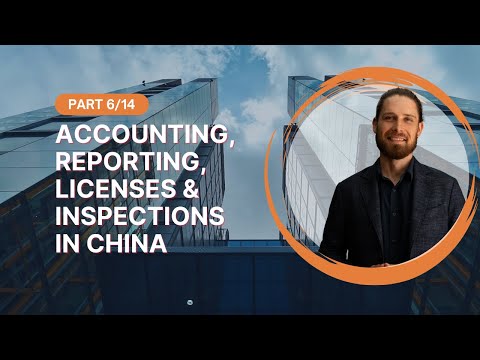
China: accounting, reporting, licences and inspections
The monthly and annual reports a Chinese WFOE files, and the licences some industries need on top of the Business Licence. The video also explains the five inspections a WFOE faces – from account opening to the annual compliance check.
Watch on YouTube →Common questions
Accounting from day one to the audit
If your question isn’t here, book a call – we’ll discuss your case in detail.
When does accounting start for my company?
Document collection starts from day one in all three jurisdictions – invoices, contracts, receipts, bank statements.
In Hong Kong the first formal cycle (audited financial statements and the Profits Tax Return) comes 12 to 18 months after incorporation. In China monthly VAT and IIT (individual income tax) filings start in the first month: there is no first-year grace, and a company with zero revenue still files zero returns. Singapore follows your financial year-end: ECI (Estimated Chargeable Income) is due within three months of it and the Annual Return within seven. Form C-S or C is due by 30 November of the Year of Assessment.
Do you handle the audit too, or just the bookkeeping?
In Hong Kong and Singapore we handle the whole cycle through one point of contact – bookkeeping, financial statements, coordination with the licensed CPA for the audit, and the tax return.
China works differently. We handle the accounting and the ongoing consulting, and coordinate the annual audit with a licensed Chinese CPA firm, but your company needs an in-house treasurer – the 出纳员 (chūnàyuán) role – a Chinese-speaking employee who collects physical invoices, prints and sorts paperwork, downloads bank statements, and handles communication with banks and government offices. By Chinese law the accountant cannot handle primary documents such as invoices and bank slips, so the treasurer role isn’t optional. Without it, a Chinese company cannot operate. When the company is set up, we explain what the role involves.
What if I’m missing receipts or contracts for past transactions?
We work with what you have. For transactions where the receipt is missing but the bank statement shows the payment, we can usually reconstruct enough context to categorise it – with a note on what’s documented and what isn’t. From then on, we give you templates and a monthly folder structure that shows what to keep, so the gap doesn’t repeat.
In the worst case for small undocumented amounts, we can reclassify them as advances to the director – with proper documentation – and the director carries the balance until it’s settled. This works for an occasional small amount. It does not replace proper records.
One caveat for Hong Kong: if you plan to claim offshore status, the auditor reviews 100% of invoices instead of the 10–30% sample applied to onshore companies. Gaps that don’t matter for onshore status can disqualify an offshore claim. If that is your plan, tell us early, and we will set up document collection for a 100% invoice review from day one.
Can you take over accounting for a company we didn’t set up?
Yes. We start with a handover review of the prior bookkeeper’s work: the latest set of statements and how documents are kept today. We also check for open items with the tax office or the auditor, and identify what needs catching up before we run the next cycle.
If we find problems from prior years, we tell you what they are and what fixing them looks like. You decide what to clean up and what to leave.
How does pricing work?
For Hong Kong and China, pricing is tiered by your company’s annual turnover, and the tier moves to the next bracket as the company grows. For Singapore we quote each company individually.
On the consultation call for a Hong Kong or China company, you tell us your projected or actual turnover for the cycle and what’s in scope, and we agree the tier together. We share the calculator privately and you’ll see the breakdown for your specific company before any commitment.
Book a free 30-minute call.
Once we know the jurisdiction and your financial year-end, we talk through how we’d run the books and what the year looks like.
Book a free 30-minute call →